 0422 4378110
 8015010552
 sales@reliancesyndicate.com
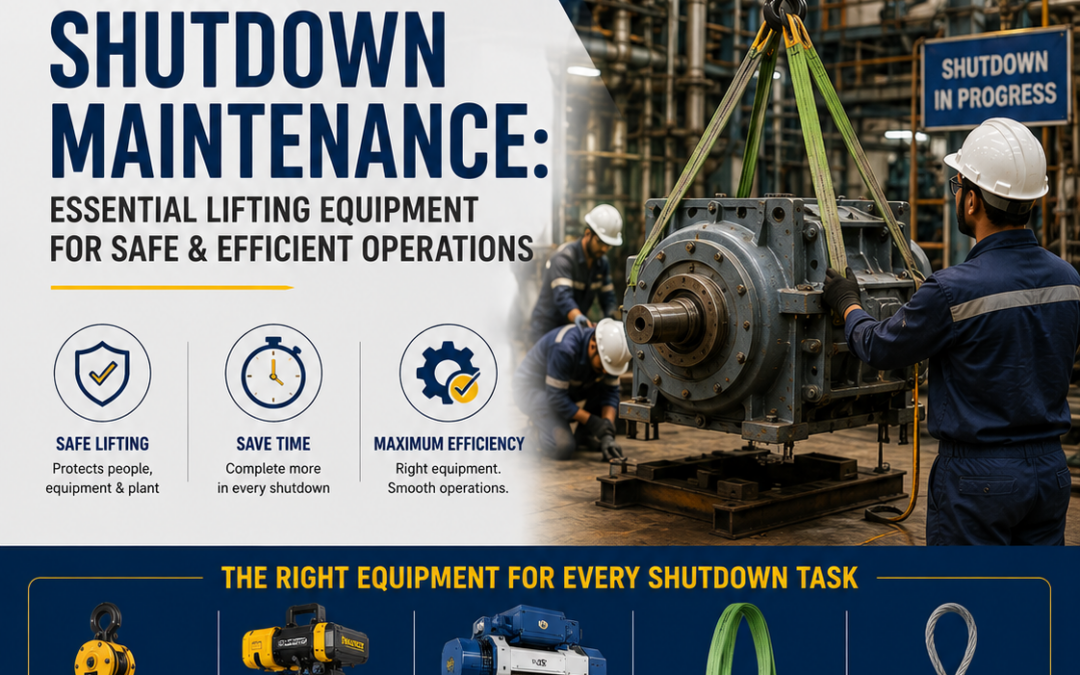
For most manufacturing plants, a planned shutdown is a race against time.
Production stops, maintenance teams move in, contractors arrive on-site, and every task is scheduled down to the hour. Equipment is inspected, worn-out components are replaced, and major repairs that can’t be carried out during normal operations are completed within a limited window. Every delay affects the restart schedule, making efficient planning just as important as technical expertise. That’s why experienced maintenance teams spend weeks planning shutdown activities before production even stops. The better the preparation, the smoother the restart.
One aspect that often receives less attention than it deserves is the lifting equipment used during shutdown activities. Whether it’s removing a gearbox, replacing a motor, servicing a heat exchanger, or repositioning heavy machinery, the right lifting solution can significantly improve both safety and productivity.
When Time Is Limited, Every Lift Counts
Unlike routine production work, shutdown maintenance usually involves multiple teams working simultaneously in the same area. Imagine replacing a large gearbox while electricians are working nearby and welders are preparing another section of the plant. Every lift must be carefully coordinated to avoid disrupting other maintenance activities.
In such situations, lifting equipment must do more than simply handle the load. It should allow components to be lifted safely, positioned accurately, and removed without disrupting nearby work.
Choosing equipment that suits the maintenance activity helps reduce unnecessary waiting time and keeps shutdown schedules on track.
Example: During a planned maintenance shutdown, a production team needed to replace two large pumps and a gearbox within the same shift. By preparing the required hoists, slings, and lifting accessories in advance, the maintenance team completed all lifting operations without delaying other scheduled work. Careful planning, not faster lifting made the difference.
Different Maintenance Jobs Require Different Lifting Solutions
A common mistake during shutdown planning is assuming one lifting solution can handle every job. Choosing one lifting solution for every shutdown activity rarely works. The right equipment depends on the weight of the component, available space, lifting height, and how precisely the load needs to be positioned.
For precision maintenance work, a Chain Pulley Block is often preferred because it provides excellent control while lifting or lowering equipment. It’s particularly useful when motors, pumps, valves, or gearboxes need careful alignment during installation.
Where maintenance involves repeated lifting or heavier industrial components, an Electric Chain Hoist can help improve productivity by reducing manual effort.
For larger equipment, greater lifting heights, or continuous-duty applications, an Electric Wire Rope Hoist is often the more practical choice due to its higher operating efficiency and smoother lifting performance.
During shutdown maintenance, the most effective lifting equipment is the one that matches the task not simply the one with the highest capacity.
Don't Overlook the Accessories
During shutdowns, lifting accessories are used just as frequently as hoists. In many shutdown projects, slings and lifting accessories are used more frequently than the hoists themselves, making their selection just as important
A Wire Rope Sling may be ideal for lifting fabricated steel structures or heavy mechanical assemblies, while Polyester Slings and Lifting Belts are often chosen when finished surfaces need protection from scratches or dents.
Similarly, Chain Slings are widely used where durability and resistance to demanding industrial conditions are important.
Selecting the appropriate accessory based on the load and working environment helps create a safer and more efficient lifting operation.
Inspect Lifting Equipment Before the Shutdown Begins
One of the most common shutdown mistakes is discovering damaged lifting equipment after maintenance has already started. Inspecting hoists, slings, shackles, and hooks before the shutdown window begins allows replacements to be arranged without affecting the maintenance schedule.
Many maintenance teams also prepare a lifting schedule that identifies which equipment will be needed, where it will be used, and when it will become available for the next maintenance task. Good planning reduces waiting time between jobs.
Successful Shutdowns Are Planned Weeks in Advance
The most successful shutdowns rarely depend on last-minute decisions.
Experienced maintenance teams prepare lifting plans well in advance by identifying the equipment that needs to be removed, confirming lifting points, inspecting hoists and slings, and ensuring sufficient working space is available.
Plant shutdowns leave very little room for unexpected problems. That’s why selecting the right lifting equipment before maintenance begins is just as important as the maintenance work itself. At Reliance Syndicate, we help industries plan shutdown lifting requirements by recommending equipment suited to the application, ensuring businesses are prepared before production stops.
Avoid These Common Shutdown Lifting Mistakes
- Assuming one hoist is enough for every job
- Forgetting to inspect slings beforehand
- Blocking lifting routes with maintenance materials
- Not identifying lifting points before shutdown
- Delaying equipment rental until the last minute
Final Thoughts
A successful plant shutdown depends on more than skilled technicians and detailed maintenance plans. It also relies on having the right lifting equipment available when it’s needed most. By preparing lifting solutions in advance, inspecting equipment before shutdown, and selecting accessories that match each maintenance task, businesses can reduce delays, improve workplace safety, and return to production with greater confidence.
Before a planned shutdown begins, prepare a lifting equipment checklist that includes hoists, slings, shackles, lifting points, inspection records, and backup equipment. Small preparation steps before the shutdown often prevent the biggest delays during maintenance.
Frequently Asked Questions
1. Which lifting equipment is commonly used during plant shutdowns?
Chain Pulley Blocks, Electric Chain Hoists, Electric Wire Rope Hoists, Wire Rope Slings, Chain Slings, and Polyester Slings are commonly used depending on the maintenance task.
2. Why should lifting equipment be inspected before a shutdown?
Pre-shutdown inspections help identify damaged equipment before maintenance begins, preventing unexpected delays.
3. Why are lifting accessories important during shutdowns?
Lifting accessories such as slings and shackles are essential for safely handling motors, pumps, gearboxes, valves, and other heavy components.
4. How can better lifting planning reduce shutdown time?
Planning lifting equipment in advance minimises waiting time, improves coordination between maintenance teams, and helps projects stay on schedule.