 0422 4378110
 8015010552
 sales@reliancesyndicate.com
A surprising number of lifting problems begin before the load even leaves the ground.
Not because the crane fails.
Not because the hoist is undersized.
But because the wrong sling was chosen.
It’s an easy mistake to make. Two loads may weigh exactly the same, yet one can be lifted safely using a Polyester Sling, while the other demands a Wire Rope Sling or Chain Sling. The difference isn’t always the weight, it’s often the shape of the load, the lifting points, the surface condition, and the environment in which the lift takes place.
Choosing a sling shouldn’t be treated as a routine decision. It’s one of the most important steps in planning a safe and efficient lifting operation. Experienced lifting professionals know that the sling often determines how safely, efficiently, and accurately a load can be handled throughout the lifting operation.
The Load Often Decides the Sling
Imagine lifting three completely different objects:
- A painted industrial control panel
- A bundle of structural steel sections
- A large cylindrical storage tank
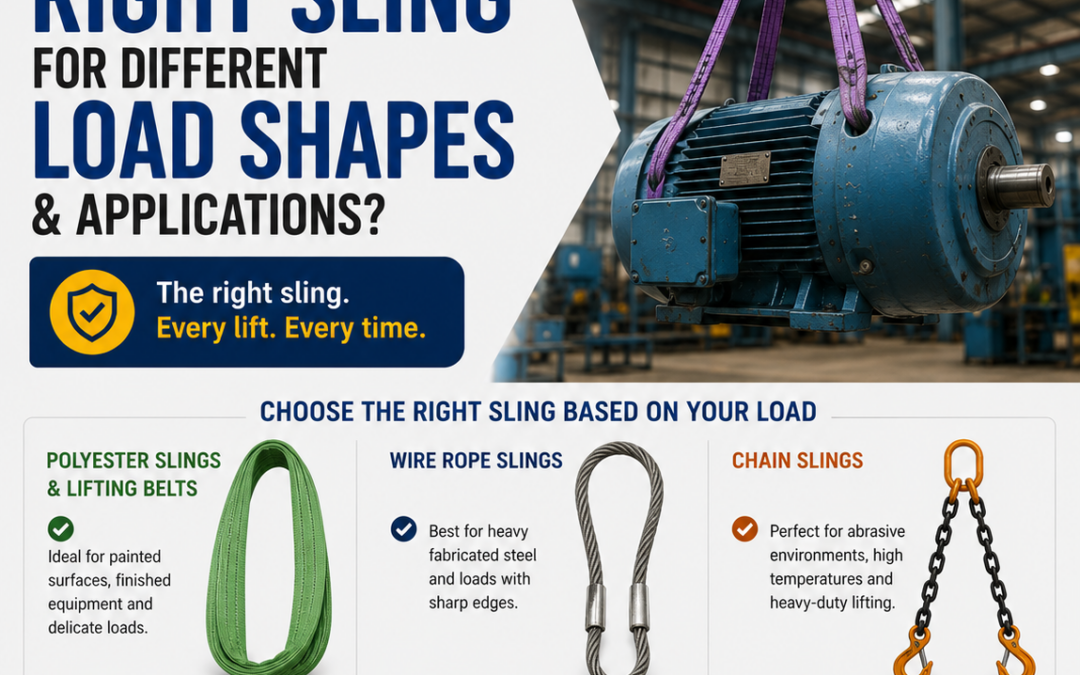
Now imagine lifting a large electric motor with limited lifting points. Although the weight may be well within the sling’s capacity, selecting the wrong sling could make accurate positioning difficult during installation. This is why experienced rigging teams evaluate both the load and the lifting method before choosing a sling.
Although each load may weigh two tonnes, very few experienced rigging teams would use the same sling for all three.
Finished or painted equipment is usually handled with Polyester Slings or Lifting Belts because they help distribute the load while reducing the risk of scratches and surface damage. Heavy fabricated steel or components with rough edges often require Wire Rope Slings, offering the strength and durability needed for demanding industrial applications.
Where loads are particularly abrasive, exposed to high temperatures, or involve repeated heavy-duty lifting, Chain Slings are often the preferred choice due to their resistance to wear and mechanical damage.
The sling is selected around the load not the other way around.
Weight Matters - But It's Not the Only Factor
When selecting a sling, many buyers naturally begin by checking the load weight. While this is essential, it’s rarely the only factor that matters.
Questions like these often influence the final decision just as much:
- Does the load have sharp edges?
- Will the sling come into contact with painted surfaces?
- Is the load balanced?
- Are there clearly marked lifting points?
- Will the lift take place indoors or outdoors?
- Will the load need to be rotated or positioned precisely?
Even environmental conditions deserve attention. Moisture, dust, chemicals, or prolonged exposure to sunlight can affect certain lifting accessories over time, making it important to match the sling to the workplace rather than simply the load.
Inspect the Sling Before Every Lift
Even the correct sling can become unsafe if it has been damaged during previous lifting operations. Before every lift, operators should inspect the sling for cuts, broken wires, worn stitching, corrosion, missing identification tags, or any signs of excessive wear. Routine inspections help identify problems before they become safety risks.
One Sling Doesn't Fit Every Job
Many businesses prefer to standardise lifting equipment wherever possible, but slings are one area where flexibility is important. A polyester sling that performs perfectly when lifting painted machinery may be completely unsuitable for handling fabricated steel with sharp edges. Matching the sling to the application helps improve both safety and equipment life.
Small Decisions Can Prevent Expensive Damage
Ask any maintenance engineer about lifting incidents, and many will tell you that equipment damage often occurs during routine handling rather than complex lifting operations.
A sling placed around an unsuitable lifting point…
An uneven load that’s not properly balanced…
A sharp corner left unprotected…
Individually, these may seem like small oversights. Together, they can lead to damaged equipment, interrupted production, and unnecessary replacement costs.
Safe lifting rarely depends on one major decision. More often, it’s the result of consistently getting the small details right.
Why Experienced Teams Rarely Rush Sling Selection?
On busy project sites, there’s always pressure to complete work quickly. Spending a few extra minutes selecting the correct sling is almost always faster and far less expensive than dealing with damaged equipment or an interrupted lifting operation.
That’s one reason many manufacturers consult their lifting equipment supplier before beginning unfamiliar lifting tasks. Instead of relying solely on product specifications, they seek practical recommendations based on the application itself. Choosing the right sling isn’t always straightforward, especially when lifting applications vary from one project to the next.
At Reliance Syndicate, we work with manufacturers, engineering companies, and construction businesses to recommend lifting accessories based on load characteristics, operating conditions, and practical application – not simply product specifications.
Final Thoughts
No single sling is suitable for every lifting application. The safest choice depends on understanding the load, the lifting environment, and how the equipment will be used. Taking a few extra minutes to evaluate these factors before every lift helps improve workplace safety, protect valuable materials, and extend the service life of lifting equipment.
Frequently Asked Questions
1. Which sling is best for lifting heavy machinery?
The best sling depends on the machine’s weight, lifting points, surface condition, and working environment. Chain Slings, Wire Rope Slings, and Polyester Slings each have different advantages.
2. Can Polyester Slings lift steel?
Yes, provided the sling’s Working Load Limit is suitable and sharp edges are adequately protected.
3. Why do sharp edges damage slings?
Sharp edges can cut or abrade lifting slings during lifting operations, reducing their service life and increasing safety risks.
4. How often should lifting slings be inspected?
Lifting slings should undergo routine visual inspections before each use and detailed inspections according to workplace procedures.