 0422 4378110
 8015010552
 sales@reliancesyndicate.com
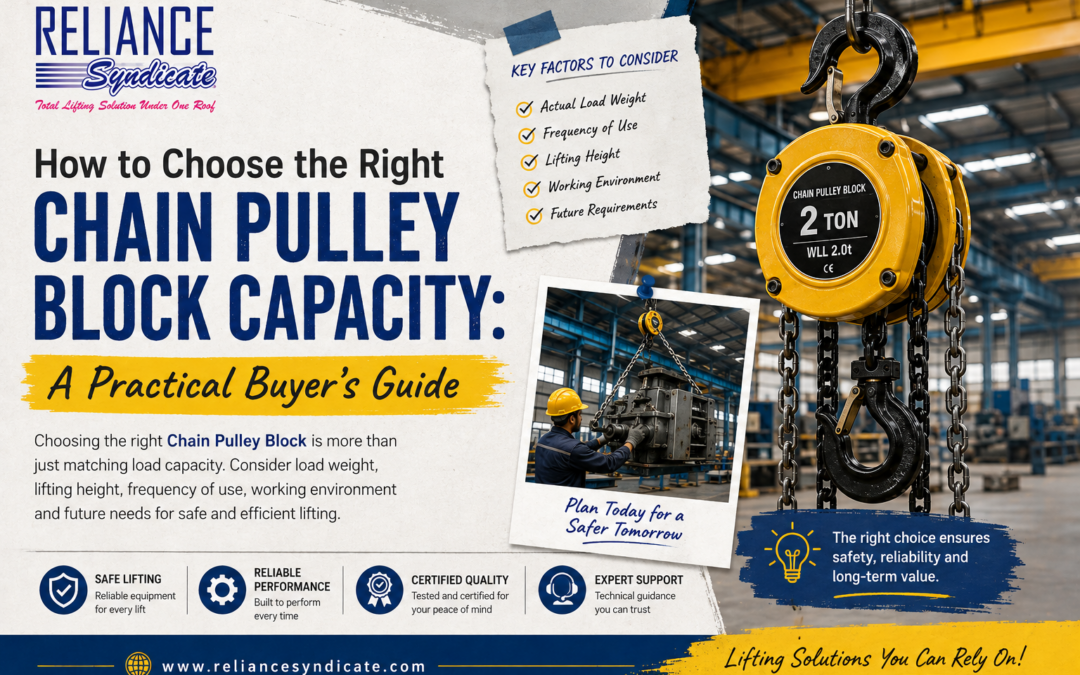
A manufacturing company needs to lift a 2-ton machine, so purchasing a 2-ton Chain Pulley Block seems like the obvious choice. On paper, the numbers match perfectly. But once the lift begins, the load feels unstable, the available headroom is insufficient, and the operation becomes far more complicated than expected. Situations like this are surprisingly common because choosing a Chain Pulley Block involves much more than matching its capacity with the weight of the load.
Consider two machines that both weigh two tonnes. One is a compact generator with clearly defined lifting points, while the other is a long fabrication assembly with an uneven centre of gravity. Although their weights are identical, the lifting approach for each will be completely different. This is why experienced engineers evaluate much more than just the load capacity before selecting a Chain Pulley Block. Whether you’re purchasing lifting equipment for a manufacturing unit, warehouse, engineering workshop, or construction project, understanding the factors that influence lifting capacity helps you make a more informed and cost-effective decision. Before comparing capacities, it’s important to understand what manufacturers actually mean when they mention lifting capacity.
Understanding What Lifting Capacity Means
Every Chain Pulley Block is assigned a Working Load Limit (WLL) or rated lifting capacity. This represents the maximum load the equipment is designed to lift safely when used under recommended operating conditions.
It’s important to remember that the rated capacity is not a target to reach every day. Safe lifting depends on using the equipment within its specified limits and following the manufacturer’s operating guidelines.
Instead of focusing only on the maximum weight, businesses should evaluate the complete lifting application before selecting a chain pulley block.
2. The Brake Isn't Holding the Load Properly
This one is easy to spot. Lift a load to a certain height, let go of the hand chain and watch.
The load should stay exactly where it is. No drift, no slow lowering, no sudden drop.
If the load creeps downward even slightly after you release the chain, your brake mechanism is worn or contaminated. Brakes in chain blocks work on a friction principle, and over time, grease contamination or worn brake pads reduce that friction significantly.
A slipping brake is one of the most dangerous faults a chain block can have. Don’t try to compensate by never leaving a load suspended. Get the brake inspected and serviced right away.
Five Factors That Help You Choose the Right Capacity
1. Know the Actual Weight of the Load
The first step is determining the weight of the object being lifted. Guesswork should never replace accurate measurements.
For fabricated structures or machinery, refer to engineering drawings or manufacturer specifications whenever possible. If the exact weight is unknown, it is better to verify it before planning the lift. Using incorrect weight estimates can result in selecting equipment that isn’t suitable for the job.
2. Will the Hoist Be Used Occasionally or Every Day?
A chain pulley block used once a week experiences different levels of wear compared to one that operates throughout the day in a busy production facility. Frequent lifting operations demand equipment that can perform consistently over time. When evaluating your requirements, consider not only today’s workload but also future production demands.
Selecting equipment based solely on occasional use may not be the best long-term investment for growing businesses.
3. Evaluate the Lifting Height
Lifting capacity and lifting height work together. For example, maintenance work inside a workshop may only require short lifting distances, while construction projects or industrial plants often involve higher lifting points.
Before purchasing, confirm that the selected Chain Pulley Block offers sufficient chain length for your application without affecting safe operation.
4. Assess the Working Environment
Operating conditions have a direct impact on lifting equipment performance.
Ask yourself:
- Will the equipment be used indoors or outdoors?
- Is the environment dusty or humid?
- Will it be exposed to heat or moisture?
- Is there enough space to operate safely?
Understanding the workplace helps in selecting equipment that performs reliably under those specific conditions.
5. Plan for Tomorrow's Work, Not Just Today's
Many businesses purchase lifting equipment based only on immediate needs. However, production volumes often increase over time, new machinery is installed, and lifting requirements evolve. Choosing equipment with future operations in mind can help avoid unnecessary replacement costs later.
Planning ahead doesn’t always mean buying the largest model available, it means selecting equipment that supports your operational goals.
A Practical Example
Imagine a fabrication company regularly lifting steel components weighing approximately 1.8 tonnes.
At first glance, a 2-ton Chain Pulley Block may appear suitable. However, if those lifts occur repeatedly throughout the day or involve awkward load positioning, additional operational considerations become important.
Rather than making a decision based solely on weight, the business should also evaluate lifting frequency, available headroom, working conditions, and the manufacturer’s recommendations before finalising the purchase.
Looking at the complete picture leads to a safer and more practical decision.
Common Mistakes Buyers Make
Even experienced buyers can overlook important details when selecting lifting equipment. After supplying lifting equipment to different industries, these are some of the buying mistakes we see most often.
Some common mistakes include:
- Choosing equipment based only on price.
- Estimating load weight instead of confirming it.
- Ignoring lifting height requirements.
- Forgetting to consider future production needs.
- Purchasing without evaluating the operating environment.
- Using equipment beyond its rated capacity.
Avoiding these mistakes not only improves safety but also helps reduce maintenance costs and equipment downtime.
Choosing a Reliable Supplier
The performance of a chain pulley block depends not only on its specifications but also on the quality of the product and the support available after purchase. Businesses looking for dependable industrial lifting equipment in Coimbatore often benefit from working with suppliers who understand different lifting applications and can recommend suitable solutions based on operational requirements rather than simply product specifications.
Reliance Syndicate combines a wide range of certified lifting equipment with technical guidance, dependable after-sales support, and competitive pricing to help businesses make confident purchasing decisions.
Questions Worth Asking Before You Buy
Before investing in a new Chain Pulley Block, take a few minutes to review these questions:
- What is the maximum weight that will be lifted?
- How frequently will lifting operations take place?
- What lifting height is required?
- Will the equipment be used indoors or outdoors?
- Is there enough operating space and headroom?
- Could production requirements increase in the future?
Having clear answers to these questions makes it easier to select equipment that matches your operational requirements
Final Thoughts
The right Chain Pulley Block isn’t necessarily the one with the highest lifting capacity it’s the one that’s best suited to your application. Taking a little extra time to evaluate your lifting requirements today can help prevent unnecessary downtime, improve workplace safety, and ensure your investment continues to deliver value for years to come.
Frequently Asked Questions
1. What size Chain Pulley Block do I need?
Choose a Chain Pulley Block based on the actual load weight, lifting height, frequency of use, available headroom, and working environment not just the machine’s weight.
2. Is it safe to lift exactly at the rated capacity?
Lifting equipment should always be operated within its rated Working Load Limit (WLL) and according to the manufacturer’s guidelines. Avoid planning routine lifts at the absolute maximum capacity.
3. Can one Chain Pulley Block be used for different applications?
Yes, provided the lifting capacity, chain length, operating conditions, and application remain within the equipment’s rated specifications.
4. How often should a Chain Pulley Block be inspected?
Routine pre-use checks should be carried out before every lift, with periodic inspections scheduled according to manufacturer recommendations and workplace safety procedures.