 0422 4378110
 8015010552
 sales@reliancesyndicate.com
Walk into almost any steel fabrication workshop and one thing becomes immediately obvious-nothing is light, and almost nothing is easy to handle.
Steel plates arrive in different thicknesses, structural beams vary in length, fabricated assemblies rarely have balanced weight distribution, and finished components often need to be moved several times before they leave the workshop. Every lift presents a different challenge, which is why lifting equipment plays such an important role in day-to-day fabrication operations.
That’s why experienced fabrication teams rarely rely on a single lifting method. Every load demands its own approach, and selecting the wrong lifting accessory can affect both productivity and workplace safety.
Interestingly, most lifting problems in fabrication shops aren’t caused by equipment failures. They usually occur because the lifting method doesn’t match the load being handled.
One Workshop, Hundreds of Different Lifting Situations
Unlike industries where products are standardised, fabrication shops deal with constantly changing jobs. A crane operator may begin the morning lifting steel plates, move fabricated columns before lunch, and finish the day positioning a large machine frame for welding.
Although the same overhead crane might be used throughout the day, the lifting accessories often change with every task. That’s because the shape, size, and surface condition of each load demand a different approach.
Experienced fabricators understand that repeating yesterday’s lifting method isn’t always the safest option today.
It’s this constant variation that makes steel fabrication different from many other industries. Standard lifting procedures don’t always apply because every project introduces new dimensions, weights, and handling requirements.
Why Sharp Edges Are One of the Biggest Challenges in Fabrication
One of the biggest challenges in steel fabrication is dealing with unfinished material.
Freshly cut plates, fabricated brackets, and welded assemblies frequently have sharp edges that can damage lifting accessories if the wrong equipment is used. A Polyester Sling or Lifting Belt may be ideal for handling painted equipment or finished components, but when sharp steel edges are involved, additional protection or even a different lifting solution altogether may be necessary.
Even high-quality lifting slings can suffer premature wear if sharp edges aren’t properly protected during lifting operations.
This is where Wire Rope Slings and Chain Slings are often preferred. Their ability to withstand demanding industrial environments makes them well suited for heavy-duty fabrication work, especially when durability is a priority.
The choice isn’t about which sling is “better.” It’s about which one suits the job in front of you.
Choosing the Right Sling Isn’t Always Straightforward
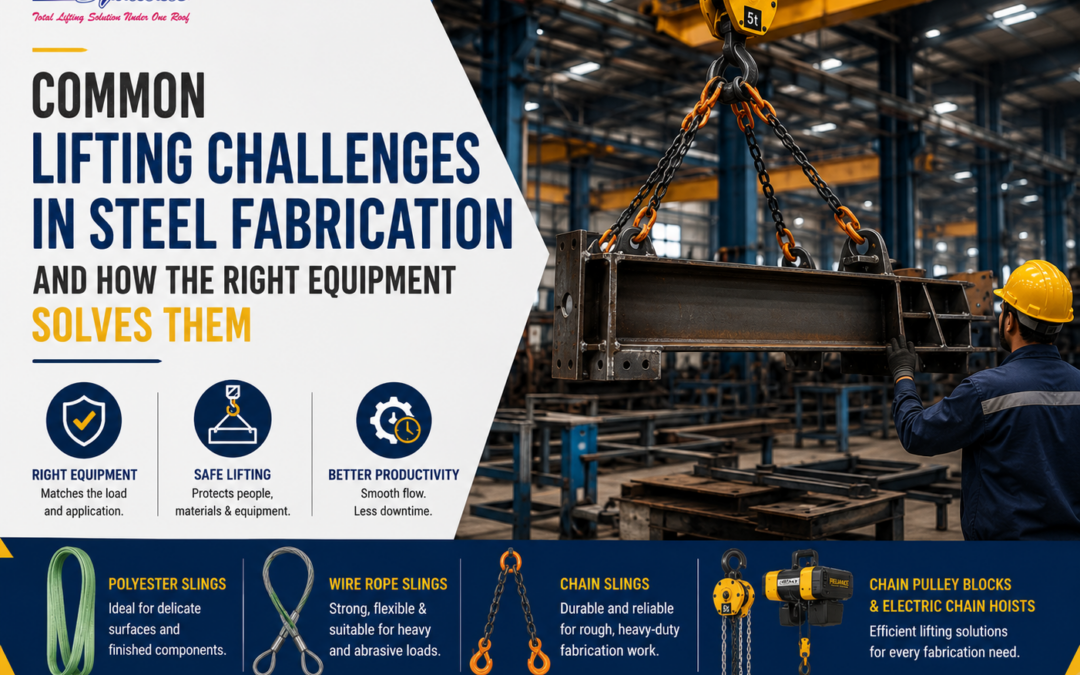
In steel fabrication, no single sling is suitable for every lifting task. Polyester Slings are often preferred for painted or finished components, while Chain Slings and Wire Rope Slings are generally better suited for heavy fabricated steel and abrasive environments. Understanding the application before selecting the sling helps improve both safety and equipment life.
Organised Lifting Equipment Saves Time
Many fabrication workshops invest in quality lifting equipment but lose valuable production time because slings, shackles, and lifting accessories aren’t organised. Clearly labelled storage, routine inspections, and easy access to frequently used equipment help operators complete lifting tasks more efficiently throughout the day.
Time Lost During Lifting Is Production Time Lost
In many fabrication facilities, welding, cutting, and machining receive most of the attention when productivity is discussed. Yet lifting delays can quietly affect the entire production schedule. If workers spend extra time searching for the right sling, repositioning unstable loads, or waiting for unsuitable equipment to be replaced, those minutes quickly turn into hours over the course of a week.
Well-organised lifting equipment, routine inspections, and selecting the right solution from the start can help workshops maintain a smoother workflow without disrupting ongoing production.
Imagine a fabrication workshop preparing a large structural frame for welding. The crane is available, but the required Wire Rope Sling is still being inspected while operators search for a suitable replacement. Production pauses, welding teams wait, and the delay affects the next scheduled operation. Situations like these show that efficient lifting isn’t just about having equipment, it’s about having the right equipment available, organised, and ready when it’s needed.
The Best Equipment Can't Replace Good Planning
Even the highest-quality Chain Pulley Block or Electric Chain Hoist cannot compensate for poor planning.
Before every lift, fabrication teams should ask a few practical questions:
- Is the load balanced?
- Are the lifting points suitable?
- Could sharp edges damage the sling?
- Is there enough clearance to complete the lift safely?
These aren’t lengthy engineering calculations, they’re simple checks that can prevent damaged materials, unnecessary rework, and costly interruptions.
Every fabrication workshop operates differently. The right lifting solution depends on the type of fabrication, the materials being handled, lifting frequency, and available crane systems. At Reliance Syndicate, we work closely with fabrication businesses to recommend lifting equipment that matches their day-to-day operations rather than simply supplying products from a catalogue.
Efficiency Starts Before the Hook Is Attached
When people think about fabrication efficiency, they often focus on faster machines or automated processes. But in reality, productivity also depends on how easily materials move from one stage of production to the next.
Choosing the right combination of Wire Rope Slings, Chain Slings, Chain Pulley Blocks, or Electric Chain Hoists isn’t just about lifting steel safely, it’s about keeping fabrication work moving without unnecessary interruptions.
The most productive workshops aren’t necessarily those with the newest equipment. More often, they’re the ones where every lift has been planned with the same attention as the fabrication itself.
Conclusion
In steel fabrication, efficient lifting is just as important as cutting, welding, or machining. Selecting the right lifting equipment for each application helps protect materials, reduce handling delays, improve workplace safety, and keep production moving without unnecessary interruptions. The most efficient fabrication workshops aren’t simply equipped with better lifting gear- they’re equipped with better lifting plans.
Frequently Asked Questions
1. Which lifting sling is best for steel fabrication?
The ideal sling depends on the material, surface condition, load shape, and working environment. Chain Slings, Wire Rope Slings, and Polyester Slings each have different advantages.
2. Why are sharp edges a concern?
Sharp steel edges can damage lifting slings during lifting operations if suitable protection or lifting accessories aren’t used.
3. How can lifting improve fabrication productivity?
Efficient lifting reduces material handling time, minimises production interruptions, and helps maintain a smoother workflow throughout the workshop.
4. Should lifting equipment be inspected daily?
Routine visual inspections before use help identify damaged slings, worn components, and potential safety issues before lifting begins.