 0422 4378110
 8015010552
 sales@reliancesyndicate.com
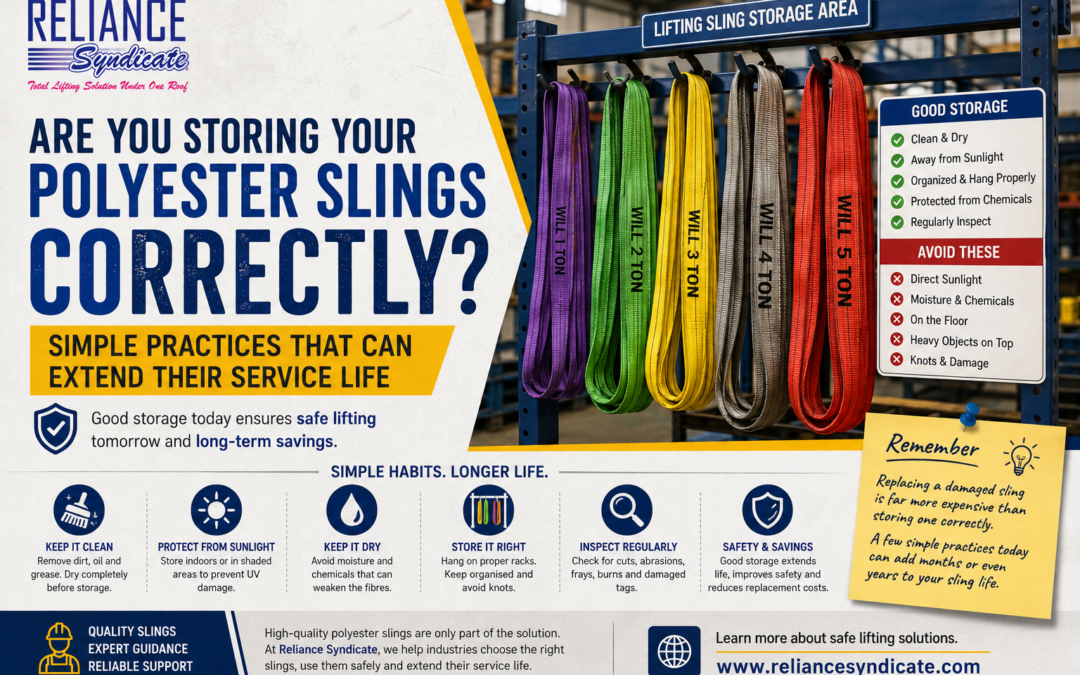
A polyester sling may only be used for a few hours each week, yet it spends the rest of its life in storage. Surprisingly, that’s where many slings begin to deteriorate. Exposure to sunlight, moisture, chemicals, or poor handling between lifting jobs can shorten a sling’s service life long before it reaches its lifting limit.
Polyester slings are designed to withstand demanding lifting applications, but like any lifting accessory, their lifespan depends on how they are treated between jobs. Exposure to moisture, direct sunlight, sharp edges, chemicals, or even careless storage can gradually weaken the fibres long before visible damage appears.
For factories, warehouses, construction sites, and engineering workshops, adopting a few simple storage practices can reduce replacement costs, improve workplace safety, and help lifting equipment perform as intended.
Why Proper Storage Is Essential for Polyester Sling Performance?
Unlike steel lifting equipment, Polyester Slings are made from high-strength synthetic fibres. While these fibres offer flexibility, lightweight handling, and excellent load distribution, they are also more vulnerable to environmental conditions if not stored properly.
A sling that’s left on a workshop floor, exposed to welding sparks, or stored in direct sunlight every day may lose its effectiveness much sooner than one that’s handled correctly. In many factories, polyester slings are among the most frequently used lifting accessories. Unfortunately, they’re also among the most frequently stored incorrectly, often left on workshop floors, exposed to sunlight, or piled beneath other equipment.
Most lifting professionals focus on how a sling is used during lifting operations. Equally important is how it’s stored after the job is finished.
Clean Slings Last Longer
One habit that often gets overlooked is cleaning the sling after use.
Dust, mud, grease, cement residue, or metal particles can become trapped within the webbing. Over time, these contaminants may increase wear or hide small signs of damage that would otherwise be easy to spot.
After completing a lifting operation:
- Remove loose dirt using a soft brush.
- Wipe away grease or oil where appropriate.
- Allow damp slings to dry naturally before storage.
- Avoid using harsh cleaning chemicals unless recommended by the manufacturer.
A clean sling is much easier to inspect and maintain.
Sunlight Is Harder on Polyester Than You Think
Polyester fibres perform well in many industrial environments, but prolonged exposure to ultraviolet (UV) rays can gradually reduce their strength. If slings are routinely stored outdoors or hung in areas exposed to continuous sunlight, they may deteriorate faster than expected.
Where possible:
- Store slings indoors.
- Use a shaded, well-ventilated storage area.
- Avoid leaving lifting equipment exposed after completing a job.
These simple precautions help preserve the material over time.
Moisture and Chemicals Can Shorten Sling Life
Industrial workplaces often contain oils, acids, cleaning agents, or other chemicals that may come into contact with lifting equipment. Although many polyester slings are resistant to certain substances, prolonged exposure to aggressive chemicals can affect their performance.
Similarly, storing wet slings without allowing them to dry properly may encourage deterioration or make inspections more difficult. Keeping storage areas dry and free from chemical contamination is a simple way to extend sling life.
How You Store a Sling Matters
The way a sling is stored matters just as much as where it’s stored. Throwing slings into toolboxes, placing heavy equipment on top of them, or leaving them tangled with chains and hooks can create unnecessary stress on the webbing.
Instead:
- Hang slings on designated storage racks or hooks.
- Keep different capacities separated where possible.
- Avoid placing heavy objects on stored slings.
- Prevent knots or unnecessary twisting.
Organised storage makes inspections quicker and reduces accidental damage.
Inspection Shouldn’t Wait Until the Next Lift
Many workplaces inspect lifting equipment before a job begins, but fewer take the time to inspect it after the work is finished.
A quick post-use inspection helps identify cuts, abrasions, frayed stitching, burns, or damaged identification tags before the sling is returned to storage.
Finding damage immediately allows repairs or replacements to be arranged before the next lifting operation, reducing unexpected delays.
Common Storage Mistakes We Frequently See
Examples:
- Leaving slings on the workshop floor
- Hanging slings next to welding stations
- Storing slings beneath heavy tools
- Mixing damaged and serviceable slings
- Ignoring faded identification tags
Simple Habits That Can Add Months or Even Years to Sling Life
Extending the life of a Lifting Belt doesn’t always require expensive maintenance programmes.
Simple habits can make a noticeable difference:
- Store slings in a clean, dry location.
- Keep them away from direct sunlight.
- Avoid dragging them across rough surfaces.
- Protect them from sharp edges during lifting.
- Never store damaged slings with serviceable equipment.
- Follow regular inspection schedules.
Individually these actions seem minor, but together they help improve both safety and long-term performance.
Create a Dedicated Sling Storage Area
One of the simplest improvements any workshop can make is creating a dedicated storage area for lifting slings. Clearly labelled hooks, capacity-based organisation, and keeping slings away from welding, grinding, and chemical storage areas make inspections easier and reduce accidental damage.
Choosing Quality Is Only the Beginning
High-quality polyester slings are only part of the solution. Businesses also benefit from practical guidance on inspection, storage, and selecting the right sling for each application. At Reliance Syndicate, we work with manufacturers, warehouses, construction companies, and engineering firms to help them maximise the safety and service life of their lifting equipment not just purchase it.
Final Thoughts
The lifespan of a polyester sling is influenced by much more than its lifting capacity. Proper cleaning, careful storage, protection from sunlight, and routine inspections all contribute to reliable performance over time.
Replacing a damaged sling is far more expensive than storing one correctly. A few simple storage practices, carried out consistently, can improve workplace safety, reduce replacement costs, and help lifting equipment remain reliable for years.
Frequently Asked Questions
1. Can polyester slings be stored outdoors?
Whenever possible, polyester slings should be stored indoors in a clean, dry, shaded location to minimise exposure to sunlight and weather.
2. How often should polyester slings be inspected?
Visual inspections should be carried out before each use, with periodic detailed inspections following workplace procedures and manufacturer recommendations.
3. Can moisture damage polyester slings?
Prolonged exposure to moisture and chemicals may reduce the service life of polyester slings, making proper drying and storage important.
4. When should a polyester sling be replaced?
Replace the sling immediately if it shows cuts, burns, severe abrasion, broken stitching, or missing identification tags.