 0422 4378110
 8015010552
 sales@reliancesyndicate.com
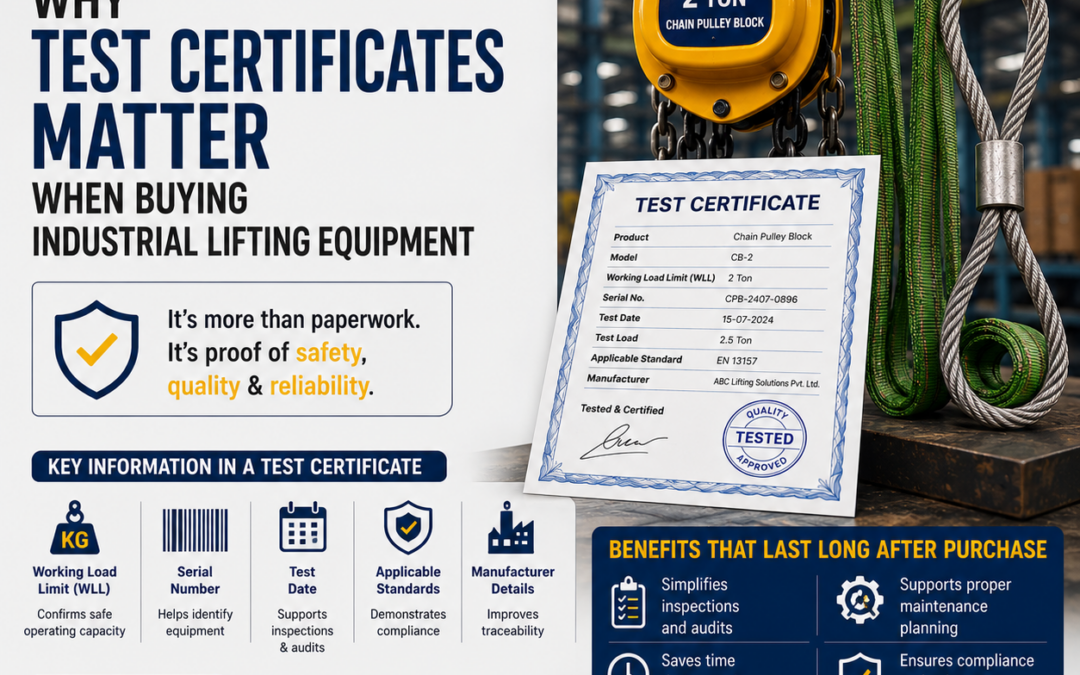
Imagine receiving a brand-new Chain Pulley Block or Wire Rope Sling for your factory. The packaging looks perfect, the specifications match your order, and tucked inside the box is a document labelled “Test Certificate.”
For many buyers, that’s where the story ends. Once the equipment is commissioned, many buyers rarely look at the certificate again until an inspection or audit takes place. Months later, when an inspection, audit, or maintenance review takes place, that same document suddenly becomes one of the most important records associated with the equipment.
A test certificate isn’t just paperwork supplied with lifting equipment – it’s evidence that the product has been inspected and tested before reaching your workplace. Understanding what that certificate represents helps businesses make informed purchasing decisions and supports safer lifting operations over the equipment’s service life.
A Test Certificate Is More Than Just Paperwork
In many industries, documentation is often treated as an administrative requirement. Test certificates, however, serve a practical purpose. They provide traceability, demonstrate product verification, and give buyers confidence that the equipment has been inspected before use.
They provide confidence that the lifting equipment has undergone specific inspections or tests before being supplied. The certificate acts as a record of the product’s conformity with applicable standards and testing procedures.
For safety officers and maintenance teams, this information becomes particularly valuable during inspections, internal audits, and preventive maintenance planning.
What Information Should You Expect to Find?
Although the exact format may vary depending on the manufacturer or the product, a typical test certificate generally includes details such as:
|
Information |
Why It Matters |
|
Working Load Limit (WLL) |
Confirms safe operating capacity |
|
Serial Number |
Helps identify equipment |
|
Test Date |
Supports inspections and audits |
|
Applicable Standards |
Demonstrates compliance |
|
Manufacturer Details |
Improves traceability |
Rather than viewing these details as technical formalities, businesses should use them to confirm that the supplied equipment matches their purchase requirements.
Why Test Certificates Matter Long After the Purchase?
The value of a test certificate doesn’t end once the equipment is delivered. Months or even years later, maintenance teams may need to identify the original lifting capacity of a Chain Pulley Block, verify the specifications of a Wire Rope Sling, or confirm product details during periodic inspections. Without proper documentation, tracing equipment history becomes much more difficult.
Keeping certificates organised alongside maintenance records helps businesses simplify inspections and maintain better control over their lifting assets. They also make equipment replacement easier. If an identical lifting accessory is required in the future, historical records help maintenance teams identify the correct specifications without relying on estimates.
Imagine a maintenance team replacing a Wire Rope Sling that has been in service for several years. Without the original test certificate, identifying the correct Working Load Limit, construction details, or product specifications becomes more difficult. Having accurate documentation allows the replacement to be ordered quickly and confidently.
When Should You Ask for a Test Certificate?
Buyers should request test certificates when purchasing Chain Pulley Blocks, Wire Rope Slings, Chain Slings, Polyester Slings, Electric Hoists, and other lifting equipment where documentation forms part of internal safety procedures or customer compliance requirements. Asking for the certificate at the time of purchase helps avoid delays later.
Keep Digital Copies Too
Many businesses still store certificates in physical folders. Maintaining digital copies alongside equipment records makes future inspections, audits, and equipment replacement much easier. It also reduces the risk of important documents being misplaced over time.
Price Matters but Documentation Matters Too
When comparing lifting equipment, it’s natural to focus on pricing, delivery timelines, or product availability. However, documentation quality deserves equal attention. In industries where lifting equipment is inspected regularly, missing documentation can create unnecessary administrative delays during audits and maintenance reviews.
Reliable suppliers don’t simply deliver equipment, they ensure customers receive the supporting information needed to use and maintain it confidently. This includes proper documentation, product traceability, and assistance whenever technical clarification is required.
Reliable lifting equipment should always be supported by reliable documentation.
At Reliance Syndicate, we provide customers with quality lifting equipment backed by proper documentation, practical technical guidance, and product traceability, helping businesses purchase with greater confidence and maintain accurate equipment records throughout the product’s service life.
Good Record Keeping Saves Time Later
One practical habit followed by many well-managed factories is maintaining a dedicated record for every major lifting accessory and lifting device. Instead of storing certificates in separate files that are difficult to locate later, they organise them alongside equipment inspection records, maintenance schedules, and service history.
This small administrative step saves valuable time during audits, simplifies future inspections, and ensures important information is always readily available when it’s needed most.
Conclusion
Test certificates are far more than supporting documents they’re an important part of safe equipment management. By understanding the information they contain and keeping them properly organised, businesses can simplify inspections, improve traceability, support compliance requirements, and make better long-term decisions about their lifting equipment.
Frequently Asked Questions
1. What is a lifting equipment test certificate?
A test certificate is a document confirming that lifting equipment has undergone specified inspections or testing before being supplied.
2. Should every lifting product have a test certificate?
Requirements vary depending on the product and application. Buyers should discuss documentation requirements with their supplier before purchasing.
3. How long should test certificates be kept?
Many businesses retain test certificates throughout the service life of the equipment as part of their maintenance and inspection records.
4. Can digital copies be used?
Many organisations maintain both physical and digital copies to improve record management and simplify future inspections.