 0422 4378110
 8015010552
 sales@reliancesyndicate.com
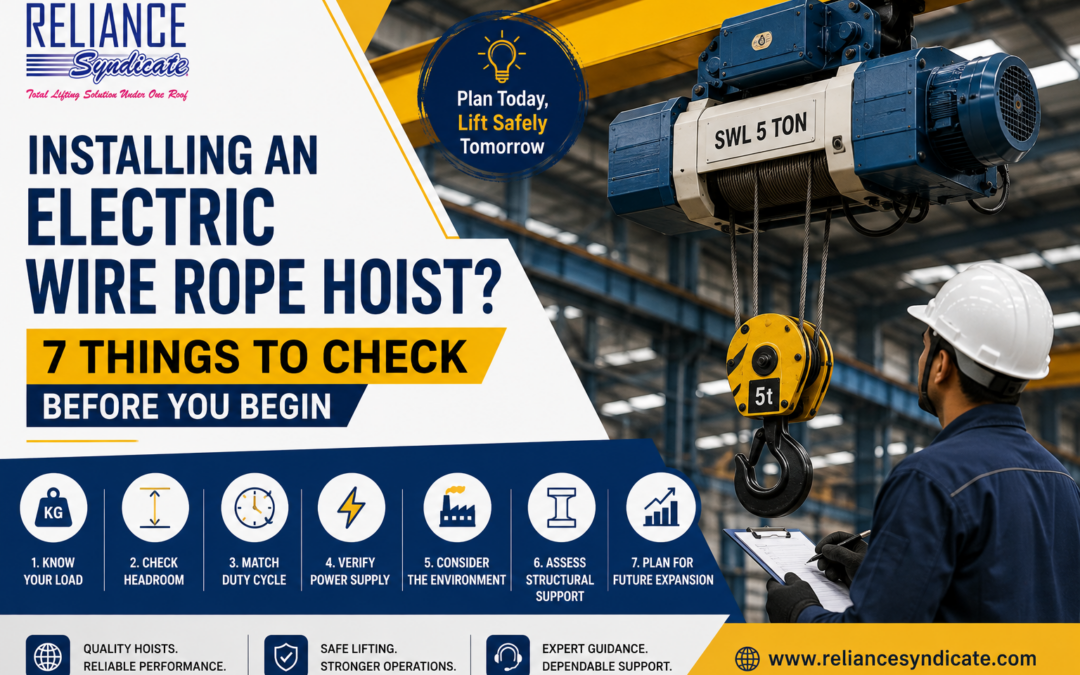
An Electric Wire Rope Hoist is expected to perform reliably for years, but its long-term performance often depends on decisions made before it’s even installed. Factors such as available headroom, structural support, power supply, and the type of load being lifted all influence whether the installation runs smoothly or creates problems later. Spending a little extra time on planning can save significant downtime and costly modifications in the future.
Many businesses invest in quality lifting equipment but overlook important installation considerations. This can lead to reduced efficiency, unnecessary maintenance, or expensive modifications after installation.
Whether you’re setting up a new manufacturing facility, expanding production, or upgrading an existing crane system, taking the time to evaluate your requirements beforehand can help ensure reliable performance for years to come.
Why Installation Planning Matters
A hoist that has been correctly installed usually goes unnoticed because it performs exactly as expected. Problems arise when important planning decisions are overlooked. Limited headroom, incorrect power supply, inadequate structural support, or selecting the wrong duty cycle often become expensive issues only after installation is complete.
Understand What You’re Really Lifting
Every lifting application is different. Some industries regularly move heavy steel components, while others lift machinery, moulds, fabricated structures, or production equipment.
Before selecting an Electric Wire Rope Hoist, consider:
- Average weight of the load
- Maximum load to be lifted
- Shape and size of the material
- Whether loads are lifted vertically or require precise positioning
Understanding the nature of the load helps determine the most suitable hoist configuration and lifting capacity.
Headroom Can Limit Performance More Than Capacity
Headroom is one of the most overlooked factors during installation.
It refers to the vertical space available between the crane beam and the highest lifting position. If headroom is limited, the hoist may not achieve the required lifting height, affecting productivity. Measuring this space before installation helps avoid unnecessary adjustments later and ensures the equipment operates efficiently within the available structure.
It’s not unusual for businesses to purchase the correct lifting capacity only to discover during installation that the available headroom prevents the hook from reaching the required lifting height. Identifying these limitations before ordering the hoist avoids unnecessary modifications later.
How Often Will the Hoist Be Used?
Not every hoist is designed for the same workload.
A maintenance workshop may only use its hoist a few times each day, whereas a production facility could rely on it throughout every shift. Frequent lifting generates more wear on mechanical and electrical components, making it important to choose equipment that matches the expected duty cycle.
Selecting a hoist designed for continuous industrial use can improve reliability and reduce long-term maintenance requirements.
Don’t Assume the Existing Power Supply Is Suitable
Electric hoists must be compatible with the facility’s electrical system.
Before installation, verify:
- Available voltage
- Phase requirements
- Power stability
- Electrical protection systems
Ensuring compatibility from the beginning reduces installation delays and helps prevent operational issues after commissioning.
In older manufacturing facilities, existing electrical systems may not match the voltage or phase requirements of modern hoists. Verifying compatibility before installation helps prevent commissioning delays.
The Working Environment Matters More Than You Think
Industrial environments vary considerably, and the surrounding conditions can influence the performance of lifting equipment.
Think about questions such as:
- Will the hoist operate indoors or outdoors?
- Is the environment exposed to dust, moisture, or chemicals?
- Will high temperatures affect daily operations?
- Is corrosion likely in the working area?
Matching the equipment to its operating environment contributes to better performance and a longer service life.
Can Your Structure Actually Support the Hoist?
Even the best hoist depends on a properly designed supporting structure. Before installation, the crane beam, runway, and supporting framework should be assessed to ensure they can safely accommodate both the hoist and the intended load. Professional installation and structural evaluation help reduce safety risks and improve long-term reliability.
Plan for Future Expansion
Production requirements rarely remain the same.
A facility that currently lifts two-tonne components may begin handling larger equipment in the future. Planning for potential expansion during the initial installation can help minimise future modifications and additional costs.
Considering future operational needs is often more economical than replacing equipment a few years later.
Common Installation Mistakes
- Measuring only load weight
- Ignoring hook approach dimensions
- Forgetting electrical compatibility
- Skipping structural assessment
- Choosing the wrong duty classification
- No allowance for future expansion
A Pre-Installation Checklist
Before installing an Electric Wire Rope Hoist, make sure you have considered:
- Lifting Capacity
- Headroom
- Lift Height
- Duty Cycle
- Power Supply
- Supporting Structure
- Environmental Conditions
- Future Expansion
A structured checklist helps ensure that important details aren’t missed during project planning.
Why Expert Guidance Makes a Difference
Installing an Electric Wire Rope Hoist is a long-term investment that influences productivity, safety, and operational efficiency. Taking time to evaluate lifting requirements, structural conditions, power supply, and future expansion plans before installation helps businesses avoid unnecessary challenges later. Every lifting application has unique requirements. While product specifications provide valuable information, selecting and installing the right equipment often benefits from practical industry experience.
Reliance Syndicate supports industries with quality-assured Electric Wire Rope Hoists, expert product guidance, competitive pricing, and dependable after-sales service helping businesses invest in lifting solutions that deliver reliable performance for years to come. Businesses searching for reliable Electric Wire Rope Hoists in Coimbatore frequently work with suppliers who understand different industrial applications and can recommend lifting solutions tailored to their operational needs.
Conclusion
A successful hoist installation doesn’t begin when the equipment arrives, it begins during the planning stage. Understanding your lifting requirements, evaluating the installation environment, and preparing the supporting infrastructure help ensure that the hoist delivers safe, reliable, and efficient performance for many years.
Frequently Asked Questions
1. How much headroom is required for an Electric Wire Rope Hoist?
The required headroom depends on the hoist model, lifting height, and supporting structure. Always verify manufacturer specifications before installation.
2. Can an Electric Wire Rope Hoist be installed outdoors?
Yes, provided the hoist is suitable for outdoor use and protected against environmental conditions such as rain, dust, or corrosion.
3. What power supply is required?
Power requirements vary depending on the model. Always confirm voltage, phase, and electrical protection requirements before installation.
4. How often should an Electric Wire Rope Hoist be inspected?
Routine inspections should be carried out before use, with detailed periodic inspections scheduled according to manufacturer recommendations and workplace safety procedures.