 0422 4378110
 8015010552
 sales@reliancesyndicate.com
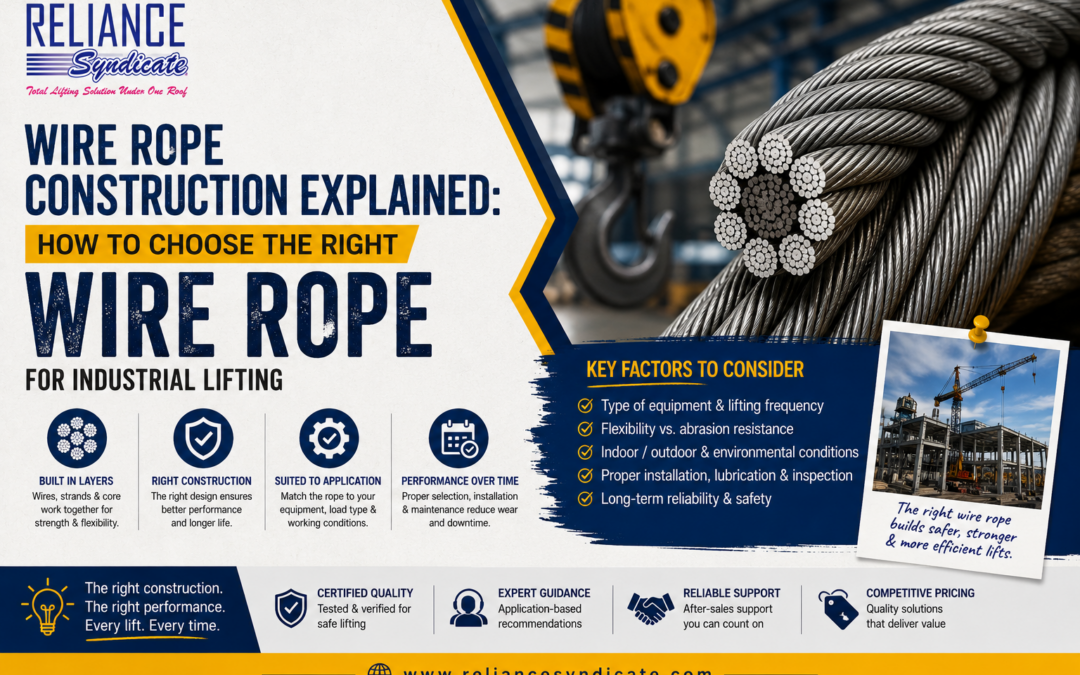
Two wire ropes can have the same diameter, look almost identical, and even carry similar specifications on paper. Yet one may last for years in a demanding industrial environment while the other wears out much sooner. The difference isn’t always visible from the outside it’s hidden in the way the wire rope is constructed. Understanding that construction can help businesses choose equipment that performs reliably, lasts longer, and suits the intended lifting application.
The arrangement of individual wires, the number of strands, the type of core, and the intended application all influence how a wire rope behaves under load. This is why industries such as construction, manufacturing, ports, mining, and heavy engineering don’t simply ask for a “wire rope” they look for one that’s designed for the job.
Understanding the basics of wire rope construction makes it easier to choose equipment that delivers reliable performance while reducing unnecessary wear and downtime.
Every Wire Rope Is Built in Layers
At first glance, a wire rope looks like a single piece of steel. In reality, it’s a carefully engineered combination of wires, strands, and a core, each contributing to its overall performance.
The smallest element is the steel wire. Multiple wires are twisted together to form a strand, and several strands are then laid around a central core to create the finished rope. Each layer has a purpose. The wires provide strength, the strands add flexibility, and the core supports the rope’s overall shape while helping it withstand repeated bending during lifting operations. This construction is what gives a wire rope its balance of strength and flexibility.
Why Construction Matters More Than Size
A common misconception is that a larger wire rope automatically performs better. In practice, selecting the wrong construction can lead to premature wear, even if the rope has sufficient lifting capacity.
For example, a rope designed for flexibility performs well when it passes frequently over pulleys and drums. A rope intended for heavy-duty static lifting, however, is built differently because its operating conditions are different.
Think of it like vehicle tyres. Two tyres may be the same size, but one is designed for highways while another is built for rough terrain. Choosing the wrong one affects performance. Wire ropes work in much the same way.
Understanding the application is often more important than simply choosing the biggest rope available.
Why the Core Is the Backbone of Every Wire Rope?
Hidden inside every wire rope is the core, one of its most important components.
The core supports the surrounding strands, helps maintain the rope’s shape, and contributes to overall performance.
Depending on the application, manufacturers may use different core designs to achieve the required balance between flexibility and support. Although the core is rarely visible during everyday use, it plays a significant role in how the rope performs throughout its service life.
Flexibility vs Durability – Finding the Right Balance
Not every lifting application demands the same type of wire rope.
Some industries require ropes that bend continuously around sheaves and pulleys. Others need ropes capable of handling heavy loads with minimal movement.
In most industrial applications, there’s always a trade-off between flexibility and durability. Generally speaking:
- Wire ropes with more individual wires tend to offer greater flexibility.
- Wire ropes with fewer but thicker wires are often more resistant to abrasion and surface wear.
Neither option is universally better. The right choice depends on the working conditions and the lifting equipment involved.
Where the Wire Rope Works Matters Just as Much as How It's Built?
The environment in which a wire rope operates has a direct impact on its lifespan.
Consider these conditions:
- Outdoor construction sites exposed to rain and dust.
- Manufacturing plants with continuous lifting operations.
- Marine environments where moisture is constant.
- Mining sites with abrasive conditions.
Each setting places different demands on the rope. Selecting a construction suitable for the environment helps improve reliability and reduces the likelihood of unexpected failures.
A wire rope used inside a clean manufacturing facility experiences very different conditions compared to one operating at a port, construction site, or mining project. Dust, moisture, salt, and repeated shock loading all influence service life.
More Than Strength: Performance Over Time
Experienced maintenance teams rarely evaluate a wire rope based on lifting capacity alone. Long-term performance, inspection history, and maintenance requirements are equally important.
Factors such as repeated bending, proper lubrication, correct installation, and routine inspections all influence how long a wire rope remains safe and effective. For this reason, experienced maintenance teams evaluate long-term performance rather than focusing only on initial specifications.
Wire Rope Buyer's Checklist
Instead of requesting a wire rope based only on diameter, it helps to discuss a few practical questions:
- What type of equipment will the rope be used with?
- How frequently will lifting operations take place?
- Will the rope operate indoors or outdoors?
- Does the application require greater flexibility or higher abrasion resistance?
- What environmental conditions will the rope be exposed to?
These answers provide valuable guidance when selecting the most suitable wire rope for the application.
Working with the Right Supplier
Selecting a wire rope isn’t simply about comparing specifications on a catalogue. Different industries require different constructions depending on load type, lifting frequency, operating environment, and equipment design.
At Reliance Syndicate, we help manufacturers, engineering companies, construction firms, and fabrication units across Coimbatore identify wire rope solutions that suit their specific applications not just their required diameter.
Conclusion
Understanding wire rope construction helps businesses move beyond choosing products based solely on diameter or price. By considering factors such as strand configuration, core design, flexibility, operating conditions, and maintenance requirements, buyers can make more informed decisions that improve reliability, reduce downtime, and extend service life.
Frequently Asked Questions
1. How do I choose the right wire rope?
Choose a wire rope based on the application, lifting frequency, working environment, required flexibility, and load not diameter alone.
2. Which is stronger: wire rope or chain?
Both are designed for different industrial applications. The best choice depends on load type, operating conditions, and lifting requirements.
3. How often should a wire rope be inspected?
Wire ropes should undergo routine visual inspections before use and periodic detailed inspections according to manufacturer recommendations and workplace safety procedures.
4. What causes wire ropes to wear out faster?
Improper lubrication, repeated bending, abrasive environments, overloading, corrosion, and poor maintenance are common causes of premature wear.